
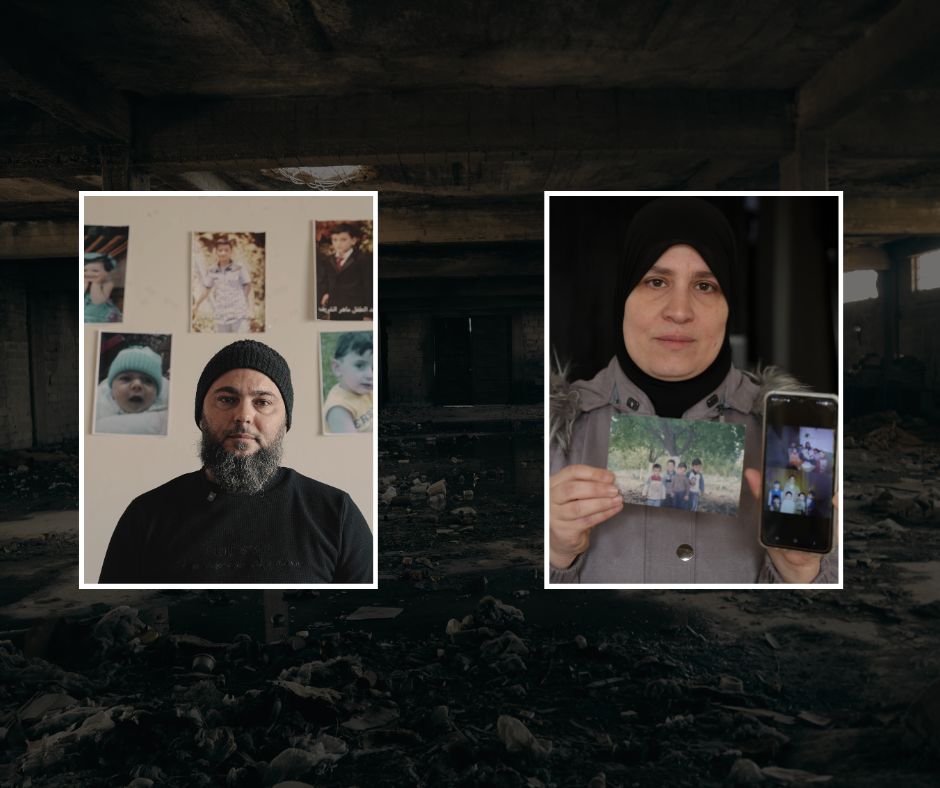
In the winter of 2013, dozens of families fleeing bombardment searched for any safe place in the countryside of Damascus. Inside a factory in the Adra area, entire families from Jobar, Arbeen, and Ain Terma gathered together.Women, children, elderly men, and infants. The place was cold and poor, but it seemed safer than the daily death in Eastern Ghouta. They did not know that the factory would later become the last place they would ever be seen alive. On February 4, 2013, entire families disappeared from inside that factory after it was surrounded by forces of the former Syrian regime and checkpoints controlling the area. Among the missing were the families of Adnan al-Sharif and al-Rabee’, along with several other families. Children only months old disappeared there, including Abada al-Arabini, a baby no older than two or three months, his five-year-old sister Lana, and seven-year-old Ali. Entire families vanished together — grandmothers, fathers, mothers, children, and pregnant women. Some accounts spoke of the men being killed first, while women and children were taken to an unknown location. But until today, no confirmed account exists of what truly happened inside the factory. Esaf Hamoudeh, who lost her grandmother, her uncle, his wife, and their six children, says the families spent years chasing every possible lead. They visited mass graves, orphanages, prisons, and searched through lists and photographs. Esaf Hamoudeh: “We run after every piece of information.” Adnan still returns to the place where his family disappeared. He stands in front of the factory as if the souls are still there. “I can feel their screams here… I feel like their photos on the walls are blaming us because we still couldn’t do anything for them.” After the fall of the former Syrian regime, hope returned for a brief moment. The families believed that opening the prisons would finally reveal the truth. But nothing appeared. No names.No documents.No graves. Only conflicting stories about prisons, checkpoints, and children who may have been transferred to orphanages or taken into the homes of security officers. Esaf says she is no longer searching only for survivors. “Even if they were killed… we want to know what happened to them.” Today, more than 14 years later, the families still carry the same photographs of those children. Children who should be young adults by now. But they remain frozen in their families’ memories… exactly as they were on the day they disappeared inside the factory….

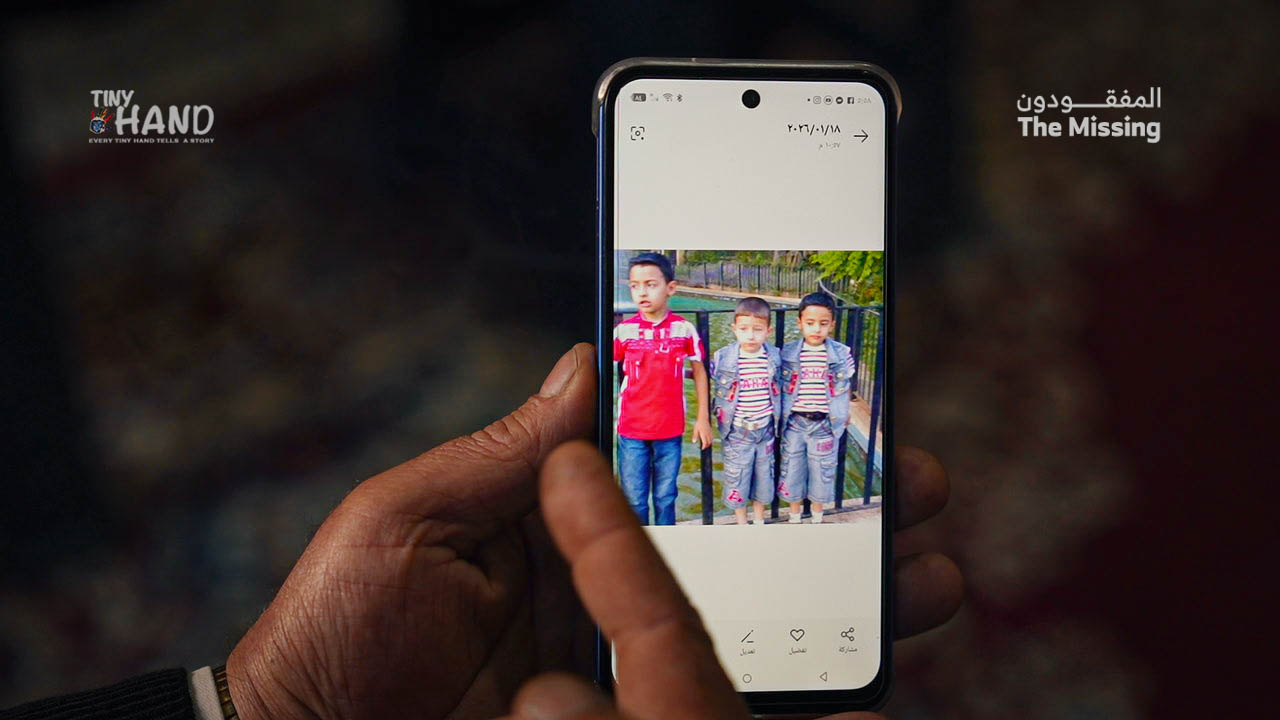
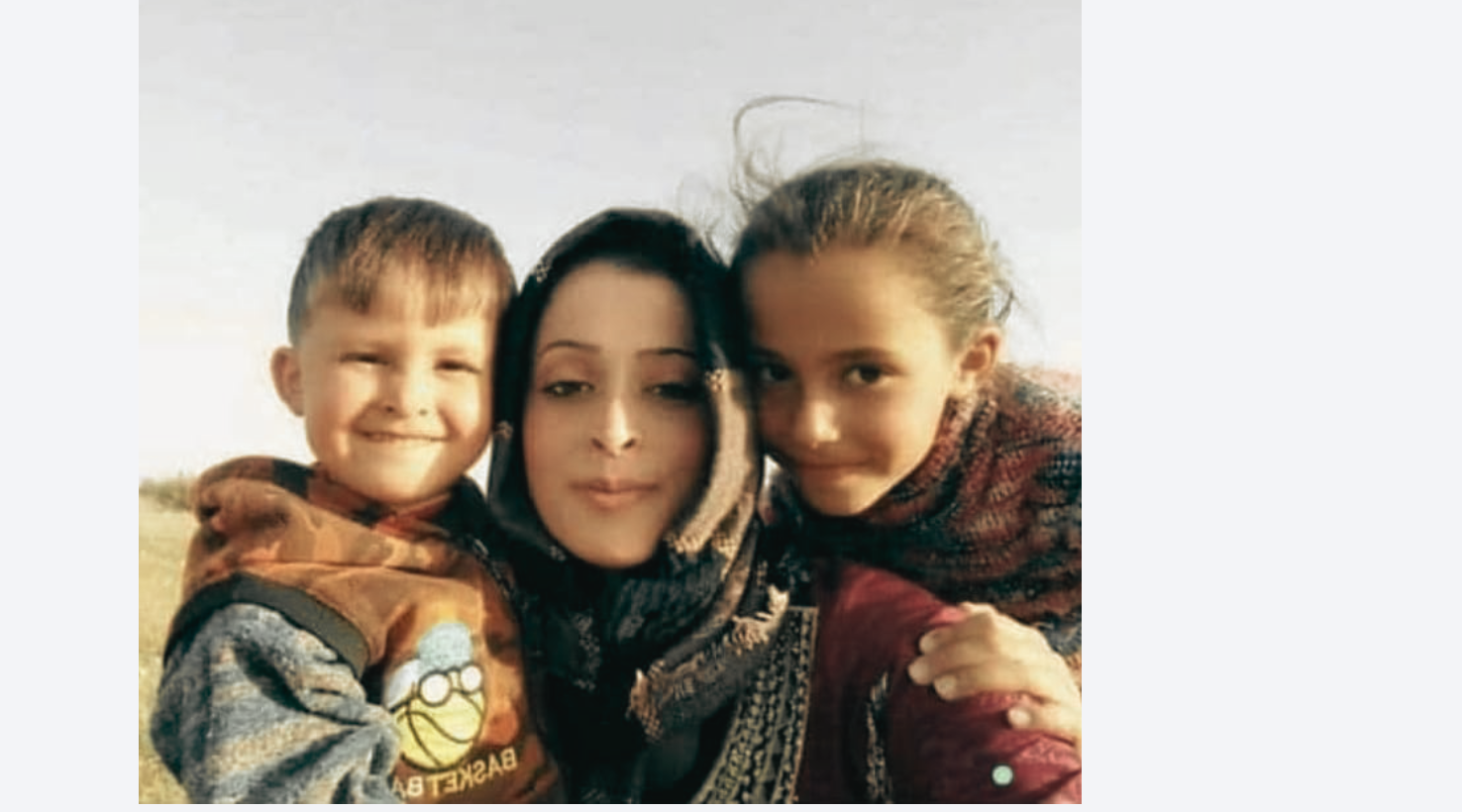
On July 15, 2024, Maryam Jdei was returning to Homs from northern Syria with her two children, Nour and Hussein, after attending a family wedding in Manbij. Her husband, Mithkal al-Khalawi, was waiting for them in Homs, following their journey minute by minute over the phone, like any father counting the moments until his children return home. Nour was ten years old, a fifth-grade student. Hussein was only six. Before reaching Homs, the family crossed through the Tabqa crossing and approached checkpoints controlled by the former Syrian regime along the Raqqa–Salamiya road. In their final call, Maryam told her husband they were nearing a checkpoint. “We’re at the checkpoint now… I’ll turn off the phone for a bit.” She was afraid security personnel would see her speaking on the phone, Then the line went dead. From that moment on, every phone became unreachable. Maryam disappeared, So did the children, As if the road itself had swallowed them. Mithkal says that at first, he could not understand what had happened. He waited for hours at the Homs bus station, convinced the bus had simply been delayed. But night came. And no one arrived. Later, he returned to the crossing where the family had last been seen. There, he was shown surveillance footage confirming that Maryam had crossed into regime-controlled territory carrying the family documents, with the two children beside her. “They were alive… I saw them with my own eyes on the cameras.” It was the last trace of them ever seen. Since that day, Mithkal’s life has become an endless search. He sold what he owned. Spent large amounts of money chasing rumors and false leads. Moved between prisons, checkpoints, and security branches. Searched through lists, photographs, hospitals, and unidentified bodies. Nothing. He says the loss was not only his family. “I lost my home… my work… my health… everything.” Mithkal once owned a small business in the Homs countryside. He stopped working completely after his wife and children disappeared. Today, he lives alone, surrounded by photographs of two children he no longer knows are alive or dead. Sometimes, he says, the waiting itself feels like another form of torture. “I reached a point where I started wishing they were dead… just so I could know where they are.”…
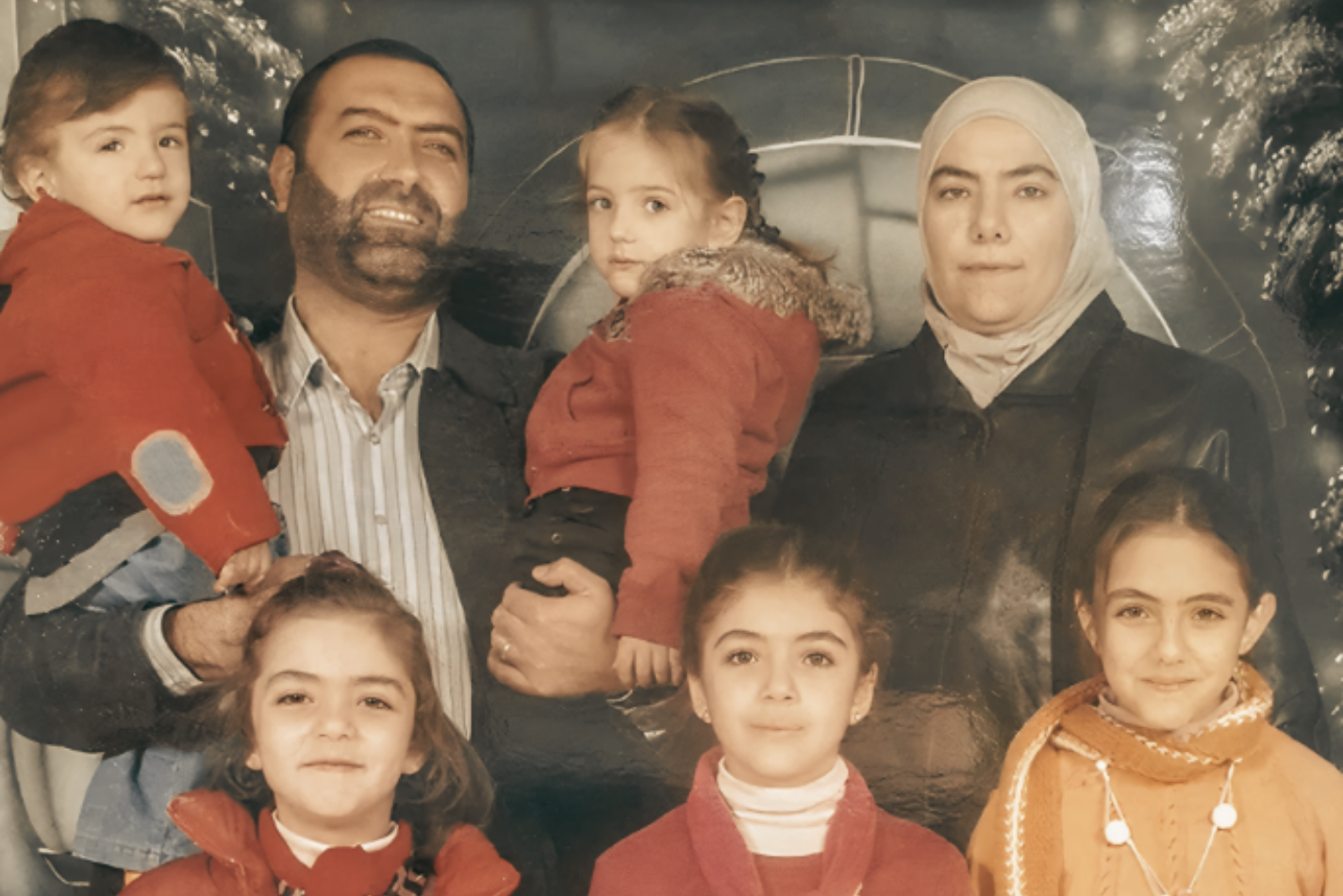
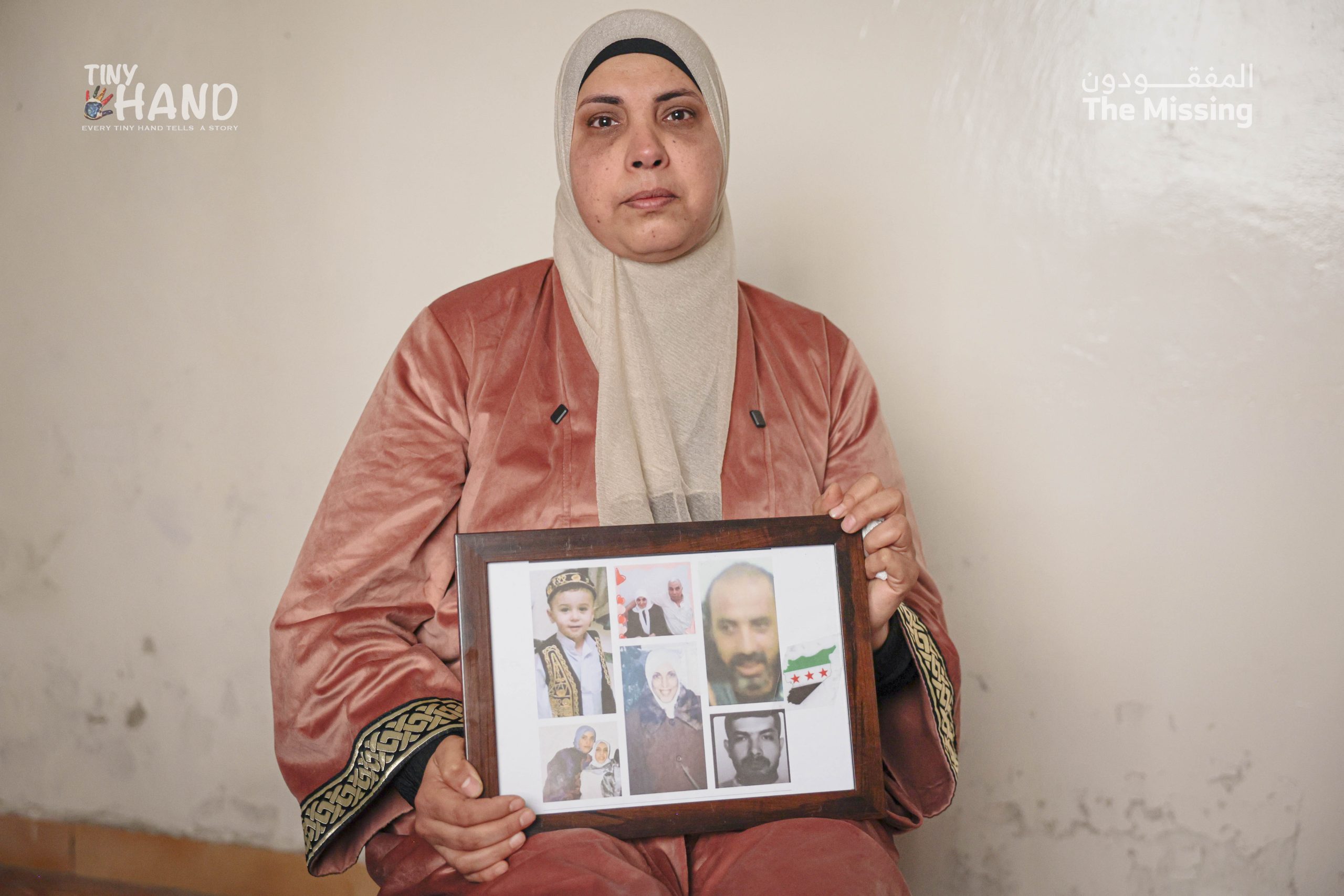
In 2013, Syrian dentist Rania al-Abbasi disappeared alongside her husband and six children inside the detention system of the former Syrian regime, becoming one of the country’s most well-known cases of enforced disappearance. Rania was not an ordinary figure. She was a respected dentist in Damascus, a former Syrian chess champion, and a mother of six children ranging in age from three to fifteen. The family lived in the Damascus neighborhood of Mashrou Dummar, far from any political activity. But as the Syrian war deepened, even ordinary families found themselves pulled into the machinery of arrest and disappearance. In March 2013, her husband, Dr. Abdulrahman, was arrested after reportedly being accused of assisting a wanted individual. Two days later, security forces raided the family home again and arrested Rania along with all six of her children: Dima, Intisar, Najah, Alaa, Ahmad, and Lian. None of them have been seen since. Over the years, fragments of information emerged from former detainees who claimed Rania had been held inside detention facilities, while reports also circulated about children being heard in nearby cells. Unconfirmed reports later suggested that Abdulrahman may have died under torture after leaked “Caesar” photos from Syrian prisons surfaced publicly. The fate of the six children, however, remains unknown. As the years passed, the case became a global symbol of Syria’s detainee and disappearance crisis, particularly because it involved the disappearance of young children inside the prison system. Human rights organizations, including Amnesty International, repeatedly called for answers about the family’s fate. Following the collapse of the former Syrian regime, the case resurfaced widely among activists and journalists demanding access to prison archives and information about thousands of missing Syrians….